What if the biggest mistake you could make when selling your Rockport home is pricing it with too much optimism? In a coastal market with a premium reputation, it is easy to assume buyers will stretch. But confident pricing is not about guessing high. It is about reading the market clearly, understanding what makes your home stand out, and choosing a number you can defend from day one. Let’s dive in.
Rockport pricing starts with context
Rockport does not behave like the broader Maine market. It consistently commands a premium, which is important if you are tempted to rely on county or statewide median prices as your guide.
A December 2025 market snapshot showed a median home price in Rockport of $792,450, with 36 active listings and a median 126 days on market. By comparison, Knox County’s median sale price was $419,000 in February through April 2026, and $450,000 in June through August 2025. Rockport’s own planning assessment, using 2023 housing data, reported a median home price of $652,650 versus $360,000 statewide.
Those numbers are not directly interchangeable because they come from different methods. Some reflect asking-price snapshots, while others reflect closed-sale medians. The key takeaway is simple: Rockport usually sits above county and state benchmarks, so your pricing strategy should be built on local evidence, not broad averages.
Use the right comps first
If you want to price confidently, start with the most similar recent closed sales in Rockport. Closed sales give you the clearest picture of what buyers actually agreed to pay, which matters more than what sellers hoped to get.
In Rockport, that usually means using detached-home sales to price detached homes. The town’s housing stock is about 83% single-family detached, while attached homes, multifamily properties, and mobile homes make up much smaller shares. If you use condo or mobile-home sales as your main benchmark for a detached property, you can easily skew the picture.
If Rockport does not offer enough truly similar sales, you can look to nearby coastal homes in places like Camden or Rockland, but only with care. The homes should match on buyer appeal, water access, views, lot size, and condition. A pretty number from a nearby town is not useful unless the property would compete for the same buyer.
What strong comps have in common
The best comparable sales usually align on a few key points:
- Similar location within or near Rockport
- Similar property type, especially detached versus detached
- Similar condition and level of updates
- Similar lot size, setting, and privacy
- Similar water access, harbor proximity, or views if relevant
- Similar buyer appeal, such as turnkey seasonal use or year-round living
When those factors line up, your pricing gets more credible. When they do not, you are making bigger judgment calls, and that is where overpricing often begins.
Location can move value quickly
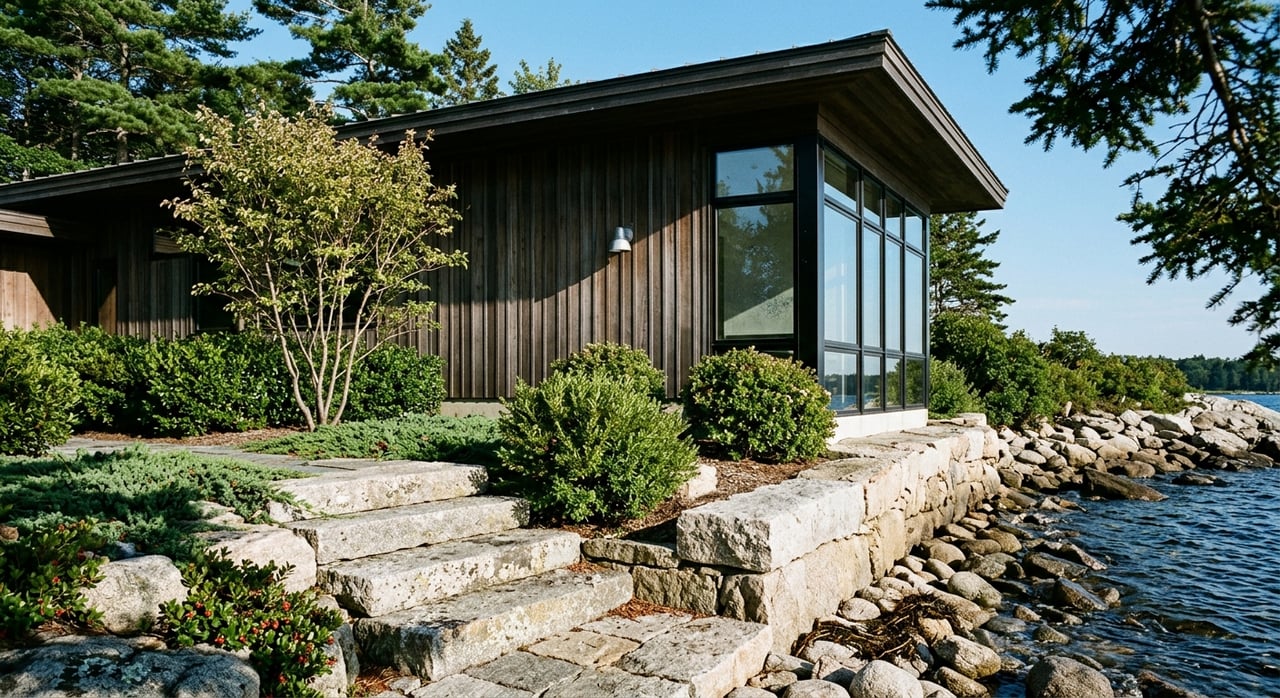
Not all Rockport locations are valued the same. Homes near Rockport Harbor or in the village may attract stronger interest because of the area’s mix of working waterfront activity, recreational boating, dining, public events, and the Opera House overlooking the harbor.
That kind of setting can support a premium over more inland homes, all else being equal. Buyers are often responding to the full experience of the location, not just the square footage.
At the same time, location can cut both ways. The town has noted that the harbor has flooded during major storm events in recent years, and local planning documents identify flood-vulnerable homes as a community concern. If your property has flood exposure, buyers may weigh insurance costs, resilience concerns, and future maintenance more carefully.
How to think about location adjustments
When you price your home, ask whether buyers would likely see it as:
- Harbor-adjacent or village-centered
- Inland but convenient
- Water-influenced with exposure concerns
- Private and wooded rather than walkable and central
Each of those patterns can affect demand. Confident pricing comes from recognizing both the premium features and the trade-offs.
Condition matters more than many sellers expect
In a coastal town like Rockport, condition is not a side issue. It is often one of the biggest pricing factors.
Local planning data points to recurring concerns such as deferred maintenance, roof and basement repairs, weatherization, insulation, HVAC improvements, tree risk, and flood-vulnerable sites. The same assessment also notes that high labor costs and a shortage of skilled trades can make repairs more difficult and more expensive.
That matters because buyers do the math. If a home shows visible wear or likely future projects, many buyers will not simply subtract the repair cost. They may discount even more because of hassle, uncertainty, and timeline risk.
By contrast, homes with well-documented improvements often hold their price better. In this market, updates that reduce future risk or operating costs are especially valuable.
Updates that can help support price
The most defensible improvements often include:
- Roof replacement or documented roof condition
- Drainage or stormwater improvements
- Insulation and weatherization work
- Efficient heating system upgrades
- Basement moisture management
- Tree work that reduces property risk
- Repairs completed properly with clear records
These updates may not create a dramatic emotional reaction the way a new kitchen can, but they can reduce buyer hesitation. In a market where coastal maintenance is real, that can make a meaningful difference.
Seasonality matters, but it does not erase pricing discipline
Rockport has a seasonal rhythm, and your pricing strategy should respect it. The town’s 2025 comprehensive plan notes a significant number of seasonal homes and says non-owner-occupied homes are increasingly being converted into short-term rentals during spring and summer, which reduces year-round inventory.
At the state level, median prices tend to rise in spring, and inventory follows a clear seasonal pattern. Maine inventory had also been increasing through 2025, reaching its highest level since October 2020 by August of that year. That points to a market that has been moving toward better balance rather than staying in a frenzied seller environment.
For many Rockport sellers, spring or early summer can still offer the best window for visibility. Homes tend to show well, and seasonal buyer attention is stronger. But that does not mean the market will forgive an inflated list price.
A median 126 days on market in the December 2025 Rockport snapshot is a useful reminder here. This is not a market where starting high is automatically a safe strategy. If your buyer pool is narrow, overpricing can cost you momentum early.
The biggest pricing mistake in Rockport
The biggest risk is assuming that Rockport’s premium status gives every home unlimited pricing power. It does not.
Rockport is a special market, but buyers still compare value closely. They look at condition, location, seasonality, flood exposure, and whether the home feels move-in ready. If your property misses the mark on one or more of those factors, the price has to reflect that.
Overpricing can lead to a stale listing, especially in a market with longer days on market. And once buyers begin to wonder why a home has lingered, price reductions often become more painful than pricing correctly from the start.
A practical way to price confidently
If you are getting ready to sell, a grounded pricing process usually looks like this:
- Review recent closed sales in Rockport first.
- Match property type carefully, especially detached with detached.
- Adjust for location, including harbor proximity, village setting, views, and flood exposure.
- Be honest about condition, deferred maintenance, and energy efficiency.
- Use county and state median prices only as background context.
- Factor in seasonality, but do not use it as a reason to overreach.
- Choose a list price you can explain with evidence.
That last point matters most. Confidence does not come from picking the highest number in the room. It comes from understanding how your home will be seen by today’s buyers in Rockport.
Why local guidance makes a difference
In a place like Rockport, small details can change the pricing story fast. A harbor-side setting, a documented heating upgrade, a dry basement, or a low-maintenance setup for seasonal use can all shape how buyers respond.
That is why local knowledge matters. You need pricing that reflects not just broad market data, but the way buyers actually weigh lifestyle, condition, and coastal risk in Midcoast Maine.
If you are thinking about selling and want practical, evidence-based guidance, The Uhll Group at Legacy Properties Sotheby's International Realty can help you evaluate your home through a local lens and build a pricing strategy that fits today’s Rockport market.
FAQs
What comps should you use to price a Rockport, Maine home?
- Start with recent closed sales in Rockport that closely match your home’s property type, location, condition, lot size, and buyer appeal.
How much do updates affect a Rockport home price?
- Updates can matter a great deal, especially when they reduce buyer uncertainty around maintenance, energy use, storm exposure, or future repair costs.
Should you use Knox County median prices to price a Rockport home?
- Use county and statewide medians as general context only, because Rockport typically commands a premium above those broader benchmarks.
Why is overpricing a Rockport home risky?
- Overpricing can slow early interest in a market that had a 126-day median days on market in late 2025, which can make a listing feel stale and lead to harder price reductions later.
Does seasonality affect when to list a Rockport home?
- Yes. Spring and early summer often bring strong visibility, but your price still needs to be based on current comparable sales rather than seasonal optimism alone.