We hear this comparison every week from relocating buyers: Camden is the name everyone knows, the harbor everyone photographs, the price everyone braces for. Belfast sits seventeen miles up the bay, costs meaningfully less, and somehow still has a working shipyard, a lobster fleet, and a downtown that doesn't feel staged for tourists. Buyers assume that gap is just Camden being famous and Belfast being modest. It's not that simple, and two ownership changes over the past year and a half explain why.
Two Sales, Eight Months Apart
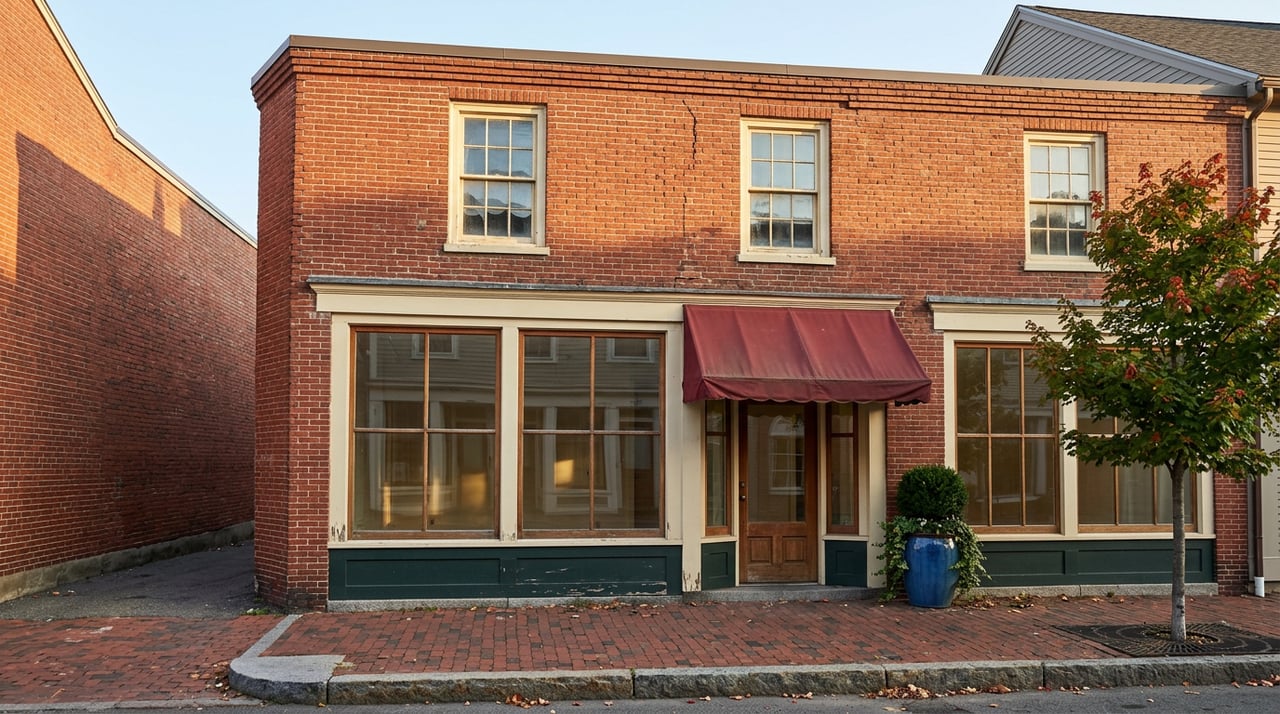
In May 2025, Consumers Fuel Co., a heating oil business that had operated out of the same brick building on Belfast's Main Street since 1911, was sold. John Holmes, the third-generation owner, announced his retirement in a letter to customers after 55 years in the business, writing about his family's history in the trade:
"Since 1911, three generations of the Holmes family have proudly served the heating needs of our friends and neighbors in the Belfast area."
The buyer was Dead River Co., a South Portland energy company that is itself owned by Redwood Capital Investments, a firm that has acquired more than a dozen U.S. heating fuel companies since 2015.
Eight months later, a much bigger piece of Belfast's waterfront changed hands the same way. Front Street Shipyard, the marina and boatbuilding facility that has anchored downtown Belfast's harbor since 2011, entered a purchase agreement with Safe Harbor Marinas, the largest marina operator in the country. Safe Harbor had itself just been acquired by a division of Blackstone in a $5.65 billion deal. Belfast's City Council approved the zoning amendment needed for the ownership change in December 2025, and the sale closed shortly after, with Safe Harbor confirming plans to invest roughly $5 million in the property over three years while keeping JB Turner, the shipyard's longtime president, running day-to-day operations.
Back in 2014, when the shipyard first received a federal loan to expand, Belfast's economic development director Thomas Kittredge called it "emblematic of the resurgence of Belfast." That framing still holds. What's changed is who owns the thing that resurgence was built on.
What Belfast's Price Gap With Camden Actually Reflects
The obvious explanation for Belfast's lower prices is that Camden has the mountains-meet-the-sea postcard and Belfast doesn't. That's true as far as it goes, but it undersells what's actually driving the number. A travel comparison published by MaineGuide.com in mid-2026 put Belfast's cost advantage at 20 to 30 percent cheaper than Camden across lodging and dining, and attributed it specifically to the fact that Belfast's harbor is working rather than scenic. Camden's waterfront economy runs on windjammer tourism and inn stays. Belfast's runs on boatbuilding, lobstering, and a downtown that serves people who live there year-round as much as people visiting for a weekend.
That distinction matters for real estate because it means Belfast's affordability isn't a discount for being second-tier. It's the byproduct of an economy that hasn't been fully priced for tourism yet. Camden's harbor has been photographed and marketed for decades. Belfast's has been used.
The Signal Buried In The Balance Sheet
Here's the part buyers weighing Belfast against Camden should sit with. When Blackstone's marina division commits $5 million to a shipyard it just paid to acquire, that's not a company preserving nostalgia. Local tax records cited in Bangor Daily News reporting put Front Street Shipyard's four Belfast properties at a combined assessed value of about $11.7 million. A firm with 149 marinas across the country and abroad doesn't put fresh capital into a property unless the underlying real estate, not just the operating business, looks like it's going to be worth more later.
The same logic applies, at smaller scale, to Consumers Fuel. Dead River didn't just buy a customer list. County records show the acquisition included property off Congress Street, and the century-old brick office at the foot of Main Street, valued at $762,000, stayed in the deal even though ownership of the building itself didn't change hands in that particular transaction.
Neither sale means Belfast prices are about to leap. But both are a data point worth more than a Zestimate: outside capital with no emotional attachment to Belfast, and every incentive to be right about where property values are headed, just bought two of its most visible pieces of waterfront real estate.
Three Things To Watch If You're Comparing Camden And Belfast
- Zoning stability. The shipyard's special contract rezoning agreement, first established in 2011 and amended eight times since, is what let Safe Harbor step into ownership without changing the site's use. Ask any listing agent whether a Belfast waterfront parcel sits under a similar agreement before assuming future flexibility.
- Continuity of local operators. Turner staying on for three and a half years and the Holmes family's public handoff both suggest Belfast's buyers of record are trying to avoid the abrupt disruption that sometimes follows an institutional purchase. That's worth confirming property by property, not assuming as a rule.
- Public investment alongside private. In March 2026, Belfast's City Council authorized grant applications tied to shoreline protection and repairs to the Armistice Footbridge, the memorial crossing along the Harbor Walk. Public infrastructure spending moving in step with private acquisition is generally a healthier signal than either one happening alone.
What Hasn't Changed (Yet)
The character that makes Belfast worth comparing to Camden in the first place is still intact. The Belfast Co-op remains one of the oldest food cooperatives in New England. The Penobscot Theatre Company still runs a full professional season. The United Farmers Market of Maine still draws vendors and shoppers from across Waldo County, and downtown Belfast carries a national Main Street designation recognizing its historic preservation work. The Passagassawakeag River, which locals call the Passy, still cuts through downtown and anchors the Harbor Walk that both the shipyard and the footbridge sit along.
None of that is threatened by a change in who owns the marina or the fuel company. What it means is that the businesses providing the economic backbone under that character are increasingly owned by people who don't live in Belfast and never will.
If You're Choosing Between The Two
If you're comparing Camden and Belfast on price alone, you're comparing a mature tourism market to one that's still being priced. That's not a reason to rush a decision, but it is a reason to treat Belfast's current price gap as a moment in time rather than a permanent feature. Camden's harbor has been fully discovered. Belfast's is being discovered by people with a lot more capital than the average second-home buyer, and they're moving on it now.
For a relocating or second-home buyer, that argues for looking closely at Belfast waterfront and near-waterfront property while the working-harbor discount still applies, rather than assuming it will still be there in five years. For a seller in Belfast, it argues for pricing with an eye on what's changing downtown, not just what sold last year.
A Few Questions Buyers Ask Us
Does institutional ownership of Front Street Shipyard mean Belfast home prices will jump soon? Not necessarily, and not on any predictable timeline. What it does mean is that a firm with far more market data than any individual buyer has decided the property underlying the shipyard is worth new investment. That's useful context for a buying decision, not a guarantee of near-term appreciation.
Will Belfast's working waterfront still feel like a working waterfront in a few years? Safe Harbor has said publicly it intends to keep the site operating as a marina and boatyard, and the existing zoning agreement and public easements along the Harbor Walk aren't going away with a change in ownership. The bigger question is what happens to smaller, family-owned waterfront and downtown businesses as more of them reach the point Consumers Fuel and the shipyard's founders did, where a sale to outside capital becomes the practical option.
Whether you're comparing Belfast to Camden for a first coastal home or trying to time a purchase around what's changing downtown, it helps to have someone tracking both the listings and the local news that explains them. The Uhll Group works Belfast alongside Camden, Rockport, and Lincolnville every day. Start Your Midcoast Maine Search with us before you assume today's price gap is tomorrow's.