Rockport Harbor holds close to 300 moorings, split between commercial boats and recreational ones, spread across a handful of named basins that any boat owner in town can rattle off from memory: Rockport North and South, the Outer Harbor, Granite Pier, Pigeon Cove, White Wharf. The town's own harbor page states plainly that the field is currently full. If you want in, you add your name to a waiting list run through the town's Online Mooring system and you wait.
That single fact changes how a waterfront purchase in Rockport should be handled, because a mooring is not a fixture that transfers with a house. It is a town permit, tied to a specific boat, issued by the Harbormaster's office, and it does not pass to a new owner just because the deed does.
What "Waterfront" Actually Buys You
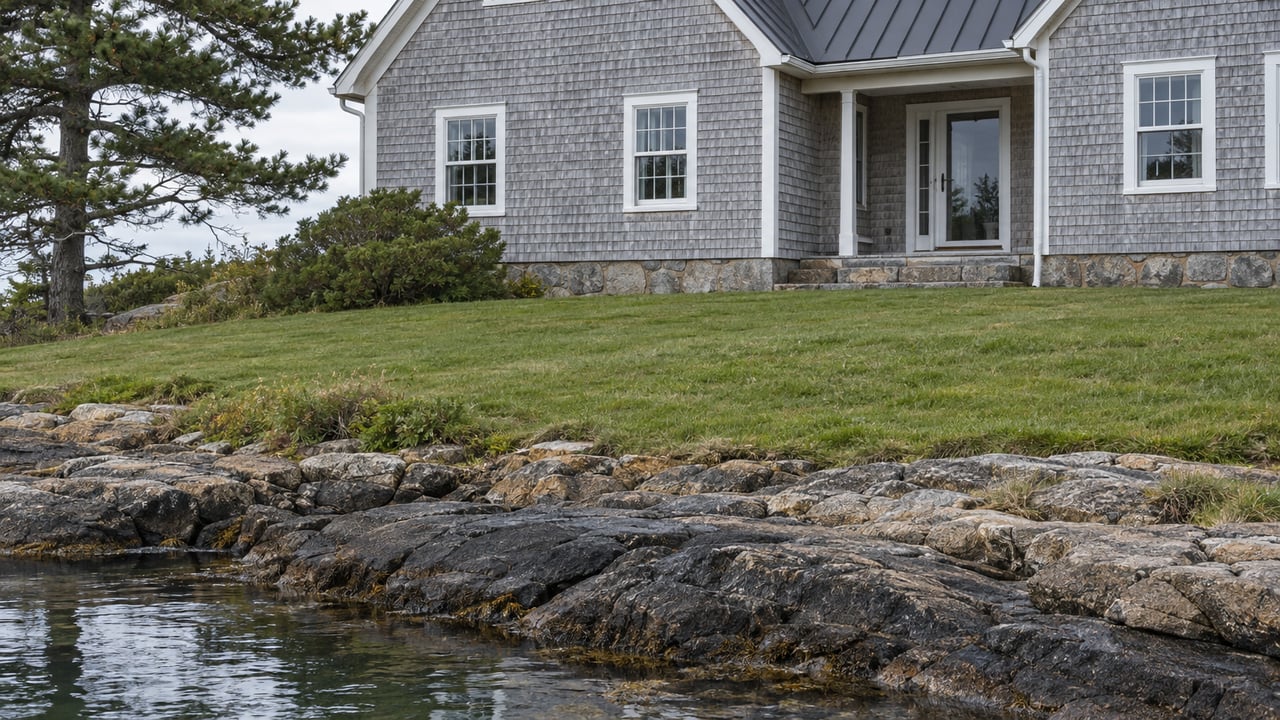
A waterfront listing in Rockport gets you frontage, a view, maybe a private dock if the property already has one and the permits to back it up. It does not get you a spot to drop anchor in the harbor. The current owner has been using the mooring for twenty years. It is not something a buyer inherits at closing the way they inherit a boiler or a well.
The Harbormaster's mooring application makes this explicit. It states that moorings are not transferable, and that a new application is required whenever a different vessel is purchased. That second detail matters as much as the first. Even someone who already holds a mooring in Rockport has to refile if they trade up to a new boat. The permit follows the vessel, not the person, and it certainly does not follow the house.
For a buyer picturing a summer where they walk down the lawn and step onto their own boat, this is the detail that gets missed until it is too late to fix quietly. The field being full means there is no guarantee of a timeline. You are not waiting for an opening the way you wait for a table at a busy restaurant. You are waiting for a spot in a rotation the town cannot promise a date for.
The Harbor Itself Explains Why the List Exists
Rockport's harbor is not one open basin. The mooring application asks applicants to name a preferred location among the Rockport Harbor North Basin, South Basin, Outer Harbor (north or south), Granite Pier, Pigeon Cove, or White Wharf. Each of those areas has its own character and its own capacity, so a buyer's place in line is really a place in line for one specific corner of the harbor, not the harbor as a whole.
The outer harbor runs deep enough to moor larger vessels, which is part of why Rockport draws boats that Camden's shallower inner harbor cannot always accommodate. That depth is also why demand for outer harbor moorings tends to run ahead of demand for the smaller coves. A buyer with a 40-foot boat and a buyer with a 19-foot skiff are not really competing for the same 300 spots. They are each waiting on a much smaller subset of that number.
The mooring field in Rockport is currently full.
That line, straight from the town's harbor page, is the whole mechanism in one sentence. It is not a warning about a busy season. It is the standing condition of the harbor.
What to Do Before You Write the Offer
None of this means waterfront ownership in Rockport is impractical for someone who wants to keep a boat. It means the mooring question needs to be handled on its own track, separate from the purchase and sale timeline, and started earlier than most buyers expect.
A few things worth doing before you are under contract, not after you close:
- Call the Harbormaster's office directly and ask what the current wait looks like for the specific basin and boat length you have in mind. The office number is listed on the town's harbor page, and the person answering the phone is the one managing the list.
- Confirm whether the property you're considering already has a working dock or shoreline structure of its own, since that can matter more than mooring access depending on how you plan to use the water.
- Ask your inspector or the listing agent whether the seller's current mooring, if they have one, is being relinquished at closing or held. It won't transfer to you either way, but knowing the seller's plans tells you what opens up in the harbor and when.
- Have a plan for the interim. Rockport does not rent moorings on a transient basis itself, but Rockport Marine rents moorings by the night for boats that need a place to sit while an owner works the waitlist.
What Happens While You Wait
Not having a mooring yet does not mean a boat has to stay on a trailer all summer. Rockport's harbor docks are first-come, first-served, with the first hour free and an hourly rate after that if space is available. Overnight dockage is offered for vessels as large as 140 feet, and most of those docks carry both water and 30 or 50 amp electrical service, so an overnight stay is not a bare-bones affair.
There is also a launch ramp at the head of the harbor along the Goose River, used by both recreational boaters and commercial haulers, which matters for anyone with a trailerable boat who wants water access without waiting on a mooring at all.
None of these are substitutes for a mooring if what you want is a boat that lives in the harbor from May to October without your involvement. But they are real, workable ways to use the water while your name moves up a list you cannot see the end of.
The Harbor Has Its Own Rhythm Regardless
Rockport Harbor is also a working harbor, not a marina built for recreational boats alone. The lime kilns lining the harbor park are a visible reminder of the town's industrial past, and the statue of Andre the seal, cared for years by Harbormaster Harry Goodridge, still looks out over the water where he used to swim to greet returning boats. On a summer morning you'll see junior sailors from the Rockport Boat Club rigging dinghies at the same dock where lobstermen are unloading traps, sometimes with a yoga class going on the lawn nearby. The harbor also hosts its own Donut Festival, a nod to the local story that the ship captain credited with inventing the fried donut hole was from Rockport. None of that changes the mooring math, but it is worth knowing that the harbor a buyer is waiting to get into is a shared, working space, not a private marina reserved for waterfront homeowners.
The Bigger Point for Anyone Comparing Waterfront Listings
If keeping a boat in the harbor is part of why you want a Rockport waterfront address, treat the mooring application the way you would treat a well test or a septic inspection. It is due diligence that runs on its own clock, separate from the purchase, and the earlier you start it the less it feels like a surprise six months after you've moved in.
A house with waterfront frontage and no mooring access is still a house with waterfront frontage. It just means your boat's home for now is a trailer, a rented mooring for the night, or a spot at the town dock while your name works its way through a list the harbor cannot promise a length for.
If you are weighing a waterfront purchase in Rockport and want help thinking through what the property includes and what it doesn't, The Uhll Group can walk you through the difference before you write an offer, not after you've already pictured the boat in the yard.
This article is general information, not legal, tax or financial advice. Consult a qualified professional about your situation.