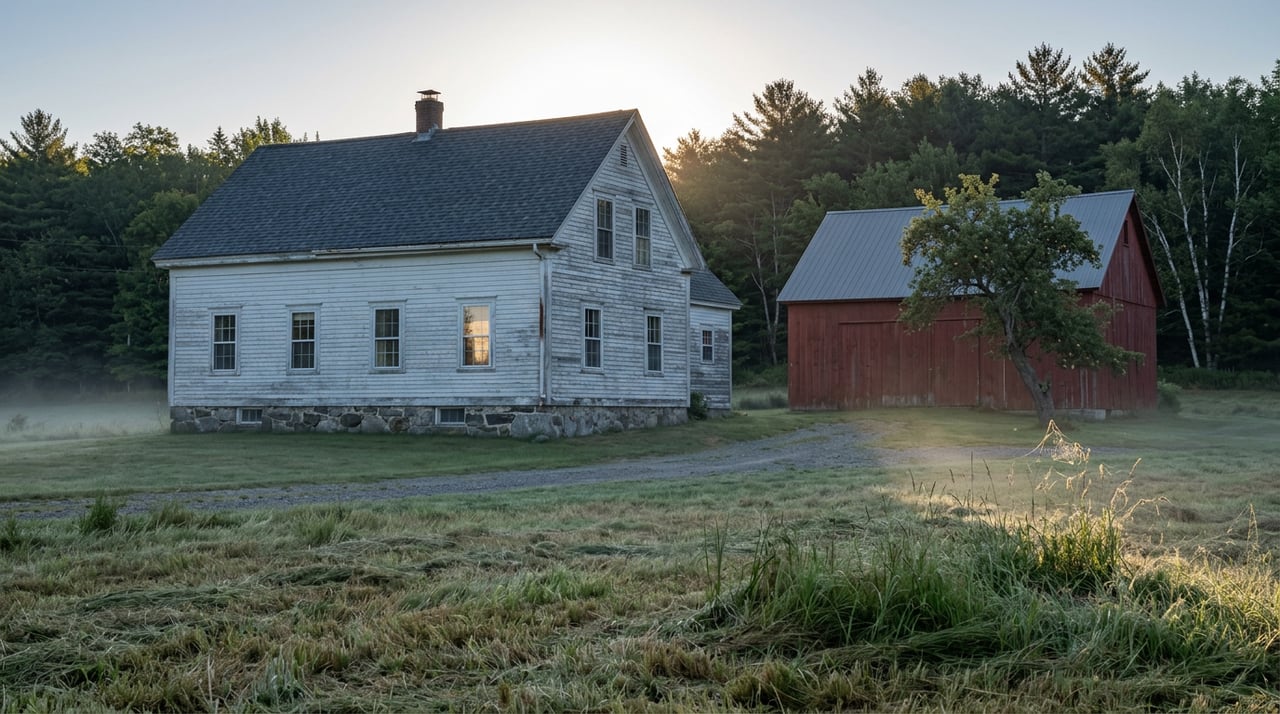
Say you just closed on twenty acres in Hope. Maybe it's an old hayfield with a tree line at the back, or a wooded parcel that came with the words "low taxes" in the listing description. The tax bill looked almost too good for the acreage. It wasn't luck. It was a state program, and the day your deed recorded, a clock started that the listing sheet never showed you.
Hope is one of the few towns in this part of Midcoast Maine where land still comes in real acreage rather than village-sized lots. Orchards, hayfields, and forested parcels are ordinary parts of the town's inventory, not the exception. That character is exactly what makes this piece necessary here in a way it isn't in Camden's harbor village or a quarter-acre lot in Rockport. Larger parcels are the ones eligible for Maine's current use tax programs, and current use enrollment is the reason so many Hope land listings show tax bills that look disconnected from their price.
The Discount Isn't a Feature of the Land. It's a Commitment You Just Took Over.
Maine runs four current use tax programs: Farmland, Open Space, Tree Growth, and Working Waterfront. Each one lets an assessor value land based on how it's actually being used, rather than at full market value, which usually means a lower total tax bill for the owner. Working Waterfront doesn't apply in Hope, since the program is limited to parcels on tidal water and Hope has none. That leaves Farmland, Open Space, and Tree Growth as the three programs a buyer might actually inherit here.
None of these are attached to the land the way a right of way or an easement is. They're enrollments, tied to a specific owner's application and ongoing compliance, and they come with real strings.
Farmland requires at least five contiguous acres used for farming, agriculture, or horticulture, and the parcel has to generate at least $2,000 a year in gross farming income to stay qualified. Tree Growth requires at least ten contiguous acres of forest land managed under a written forest management plan prepared by a Maine licensed forester, with recertification required every ten years. Open Space works differently, reducing assessed value by a percentage tied to specific land characteristics, with a cumulative reduction that can reach as high as 95 percent when every category applies.
All three lower what the current owner pays. None of them transfer automatically to the next owner in the way most buyers assume.
The Clock Starts the Day the Deed Records
This is the detail that catches people off guard, and it's specific to Tree Growth. Under the program's rules, a new owner (through purchase, inheritance, or any other transfer) has exactly one year from the date of transfer to re-enroll the parcel. That means filing a new application, either adopting the seller's existing forest management plan or commissioning a new one, and submitting it to the town assessor. Miss that window and the land is automatically withdrawn from the program.
Under Tree Growth, a new owner has one year from the date of transfer to re-enroll. Miss that window and the land is withdrawn automatically, penalty included.
Withdrawal isn't a quiet reset back to a normal tax bill starting next April. Maine law assesses a penalty on withdrawal from Tree Growth equal to 20 to 30 percent of the difference between the land's current use value and its fair market value, with the exact percentage depending on how long the parcel had been enrolled. Open Space uses the same penalty method if a parcel is disqualified. Farmland works on a different formula: if the property stops qualifying, the penalty equals the taxes that would have been paid over the last five years without the discount, minus what was actually paid, plus interest on the difference.
There's also a practical restriction that trips people up even when they're paying attention. A new owner of Tree Growth land can't legally harvest or authorize harvesting of timber until the re-enrollment paperwork is filed and a valid management plan is in place. If you buy a wooded Hope parcel planning to do some selective cutting your first winter, that plan has to exist first.
Comparing the Three Programs a Hope Buyer Might Actually Encounter
| Program | Minimum size | What keeps it in force | What triggers the penalty |
|---|---|---|---|
| Farmland | 5 contiguous acres | At least $2,000/year in farming income; income report filed every 5th year | Disqualification: 5 years of back taxes plus interest |
| Tree Growth | 10 contiguous acres of forest land | Written forest management plan, recertified every 10 years; new owner re-enrolls within 1 year of transfer | Withdrawal: 20-30% of the gap between current use value and fair market value |
| Open Space | No fixed minimum acreage | Land characteristics (open, scenic, or otherwise qualifying) remain unchanged | Disqualification: same 20-30% method as Tree Growth |
The acreage thresholds matter more than they look. A half-acre or one-acre lot in a Camden or Rockport village setting doesn't come close to qualifying for any of these programs. This is functionally a large-lot issue, and Hope has more large lots on the market at any given time than its coastal neighbors do. Land parcels currently listed in town average roughly $238,500, a number that reflects acreage more than square footage, which is a different kind of math than pricing a village house by the bedroom.
What to Confirm Before You Sign, Not After the Tax Bill Arrives
- Ask directly whether the parcel is enrolled in a current use program, and which one. This should be a straightforward question for the seller or listing agent to answer.
- Request the assessor's card for the property. Most Maine town assessors show both the current use value and the full fair market value side by side, which tells you the size of the gap you'd be exposed to on withdrawal.
- If it's Tree Growth, ask for the forest management plan itself, who prepared it, and when it was last updated. You'll need to adopt it or replace it within your first year of ownership.
- Mark your closing date as day one of a 365-day window if Tree Growth is involved. There's no grace period built into the rule.
- Talk to a Maine licensed forester or your town assessor about re-enrollment well before that year runs out, especially if commercial timber management isn't part of your plans for the land.
- If keeping the program active doesn't fit what you want to do with the property, ask your closing team to estimate the recapture penalty before you sign the purchase and sale agreement, not after the first tax bill shows up.
None of this makes current use land a bad buy. It often makes it a genuinely good one, since the discount is real and can run for years. It just means the tax line on the listing sheet is describing the seller's arrangement with the town, not a fixed feature of the property, and the twelve months after closing are yours to manage or lose.
A Few Questions Buyers Ask Us
Does this apply to a house lot in Camden or Rockport? Almost never. The acreage minimums (five contiguous acres for Farmland, ten for Tree Growth) put standard village and in-town lots outside these programs entirely. This is a Hope-sized-parcel issue more than a coastal-village one.
What if I want to keep the enrollment going? File your re-enrollment paperwork within the one-year window, follow or update the forest management plan if it's Tree Growth, and recertify every ten years. Missing any of those steps is what triggers withdrawal.
What if the land was never enrolled in the first place? Then there's no clock and no penalty exposure, just a tax bill based on full market value from the day you close. It's worth confirming either way, since enrolled land can look like an unusually good deal on paper for reasons that have nothing to do with the property itself.
Buying acreage in a town like Hope means buying into decisions a previous owner made with the town assessor, and those decisions come with deadlines that don't show up in a search filter. Tommy's years in construction and Alex's eye for what a piece of land is actually set up to do are exactly the kind of practical read this situation calls for. If you're looking at wooded or working land in Hope, or trying to figure out what a current use enrollment actually means for the parcel you're considering, the Uhll Group can help you read the fine print before you're the one holding it. Start Your Midcoast Maine Search when you're ready to look closer.